
The clocks turned back in October not only bringing shorter, darker days but with it, a plethora of wet and windy weather as we drive through autumn and head on into the winter.
Individually we prepare for this change by bolstering up with sturdier footwear and rainwear to protect ourselves from the elements, the same consideration should also be given to business premises. Rain increases the ingress of water, moisture, and dirt being tracked into buildings, which in turn, substantially increases the occurrence of floor damage and the risk of slips, trips and falls.
Sanaway’s Graham Key shares the reasons why matting is a ‘must have’ that warrants being prioritised, particularly during these wet weather months.
5 Reasons to Audit your Matting Requirements Now
Keeping dirt and moisture out of your premises can help hold down cleaning costs, while maintaining a safe, clean and welcoming environment for employees and visitors.
Dirty, wet floors can:
- Create slippery floors – Slips, trips, and falls (STFs) are the single most common cause of non-fatal injuries in UK workplaces. Whilst not all STFs can be attributed to wet floors, it’s clear that reducing the transfer of moisture onto floors will help reduce the risk. slips, trips and falls resulting in non-fatal injuries that may leave business open to a liability claim.
- Increase cleaning costs – dirty floors can increase the amount and nature of cleaning required to leave them clean.
- Create a poor image – first impressions count, and unsightly floors won’t look hygienic nor portray a standard of professionalism and care.
- Cause wear and tear – dust, rain, snow, mud stones, grease and road grit and salt are just some of the materials that can be transferred into buildings to damage floor surfaces.
- Decrease the life of the floor covering – a properly presented matting solution saves not only the majority of dirt and moisture ingress, but prolongs the life of the building floor surfaces.
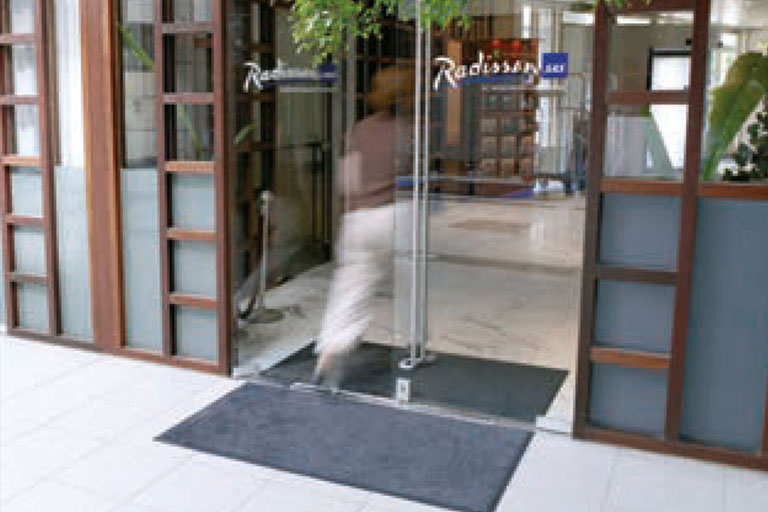
The use of correctly specified outdoor and indoor matting will help remedy all of the above by reducing water ingress and preventing up to 80% of dirt being walked or wheeled into a building.
Next steps
Invite a service provider to carry out an audit of your premises. They will identify risk points where indoor and outdoor matting would be advised.

We provide a range of floor matting systems specifically designed to create a safe and hygienic barrier for your building.
A large proportion of our matting services are with schools and other buildings that have historic wood and tiled floors. Our matting service contributes toward the conservation of these special floor surfaces by reducing damage from dirt and moisture.
Whether a bespoke logo design or standard service matting, we offer a variety of solutions to suit individual needs.
Matting should be an engineered solution to a problem
Correct matting allows for three steps, proven to effectively reduce dirt and moisture ingress that leaves floors looking dirty and reduces the damage inflicted on them. They also help reduce the need to reoil natural wood floors and other hard floor surfaces.
Our matting service supplies three types of tough, durable and effective matting that will reduce the amount and nature of cleaning, significantly reduce the wear on floor surfaces and increase the life of floor surfaces.
Servicing frequencies of weekly, 2 weekly or 4 weekly to suit individual environments
Click here for more information on Sanaway’s matting services or contact 0345 094 9495 or email info@sanaway.co.uk